
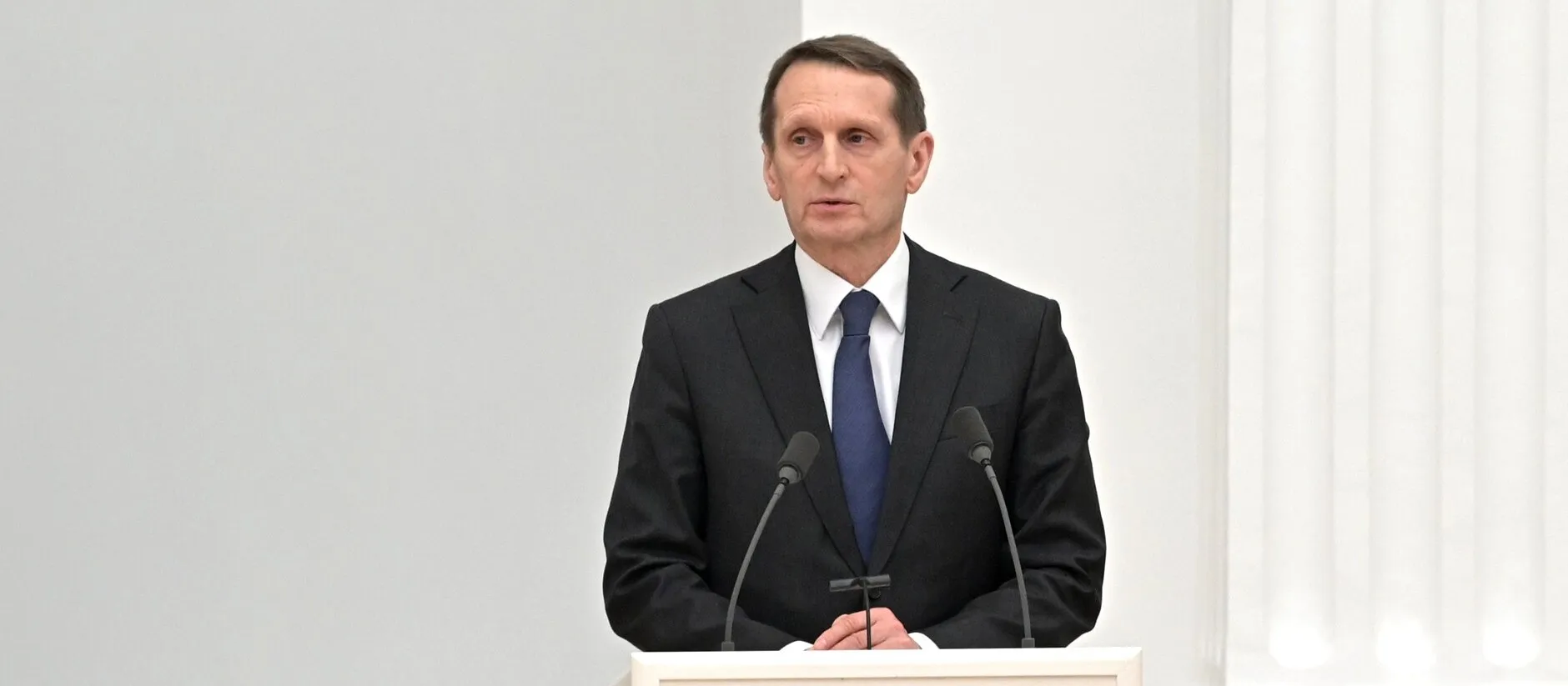
The current director of Russia’s Foreign Intelligence Service, Sergei Yevgenyevich Naryshkin, has never felt confident in the senior posts entrusted to him. And he has occasionally let slip in public that he would much rather have quiet desk work in the cultural and historical field, or somewhere out in the regions.
As far back as 2011, when Naryshkin was running the presidential administration and sensed that his dismissal was coming, he suddenly said in public that he would not mind becoming governor of his native Leningrad Region. Barely a couple of months after that speech Naryshkin was indeed removed from the presidential administration — but he was not allowed to rest in a governor’s chair. He was sent to preside over parliament instead.
The irresolution of the timid Sergei Yevgenyevich reached its peak on February 21, 2022, when something strange happened to him at the epochal session of the Security Council on recognising the Donetsk and Luhansk people’s republics. He trembled, could barely move his feet, stammered, and had plainly either forgotten or never known what the meeting was about. They say he genuinely did not know — the head of the foreign intelligence service had not been let in on the president’s plans. Hence the surprise, the failure to master his nerves, and the absurd figure he cut.
They also say that Sergei Naryshkin’s inability to conceal his agitation is what kept him from carrying out the task others tried to place on him during the war: negotiations with the West. As head of foreign intelligence he does attend diplomatic meetings, official and unofficial, but he plays no great part in them.
Where Sergei Yevgenyevich has come into his own is somewhere else entirely: he is now one of the leading cultural critics of the West. His statements that Europe is living through a historic decline, or his pronouncements on the outcome of the nineteenth-century Crimean War, are usually captioned in the European media as remarks by the director of the SVR. That is not quite accurate, because Naryshkin is in fact speaking in another of his capacities — as chairman of the Russian Historical Society.
This is plainly what Naryshkin enjoys, unlike diplomatic or intelligence work. Writing articles about the greatness of Russian history, holding forth on the outcome of a war fought two centuries ago, opening exhibitions in historical museums — these are pursuits his heart is genuinely in.
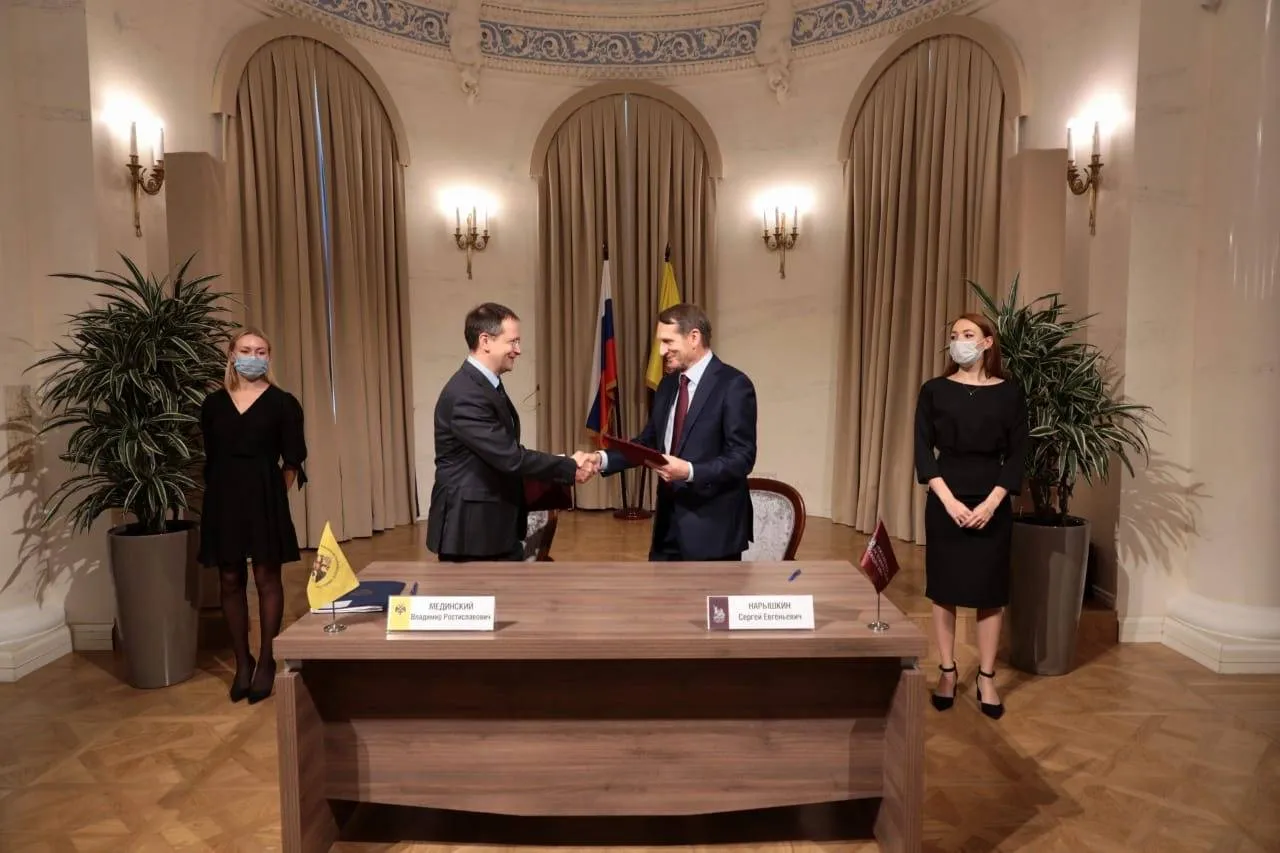
At the moment he chairs several organising committees for anniversary celebrations at once: the centenary of the Leningrad Region, the tercentenary of the Empress Catherine II, and the 225th anniversary of the Russian scholar Vladimir Dahl, author of the first dictionary of the Russian language. At the meetings of those committees Sergei Naryshkin looks nothing like the man seen at talks with foreigners or at sessions of the Security Council. He is cheerful, talkative, altogether more assured, and visibly enjoying himself.
The impression is that it is time to let Sergei Naryshkin go. He is uncomfortable; the role of the fearsome intelligence chief is not for him. And few people take Naryshkin’s public statements in that role seriously. Not long ago his threats against Latvia produced restrained bewilderment even among Russian officials. Armenia simply ignored threats of the same kind addressed to it.
With Armenia the whole thing was awkward in any case. Naryshkin is one of the chief and longest-serving lobbyists for Azerbaijan’s interests in Russia. And a personal friend of the Azerbaijani billionaire God Nisanov, who is close to President Ilham Aliyev. Between 2020 and 2023, while Azerbaijan was methodically liquidating the Nagorno-Karabakh republic, Naryshkin was among the senior officials who held the Kremlin back from intervening. Now the public efforts of the head of the Foreign Intelligence Service to keep Armenia in Russia’s orbit look like a mere formality. He is the man who broke that alliance up in the first place.
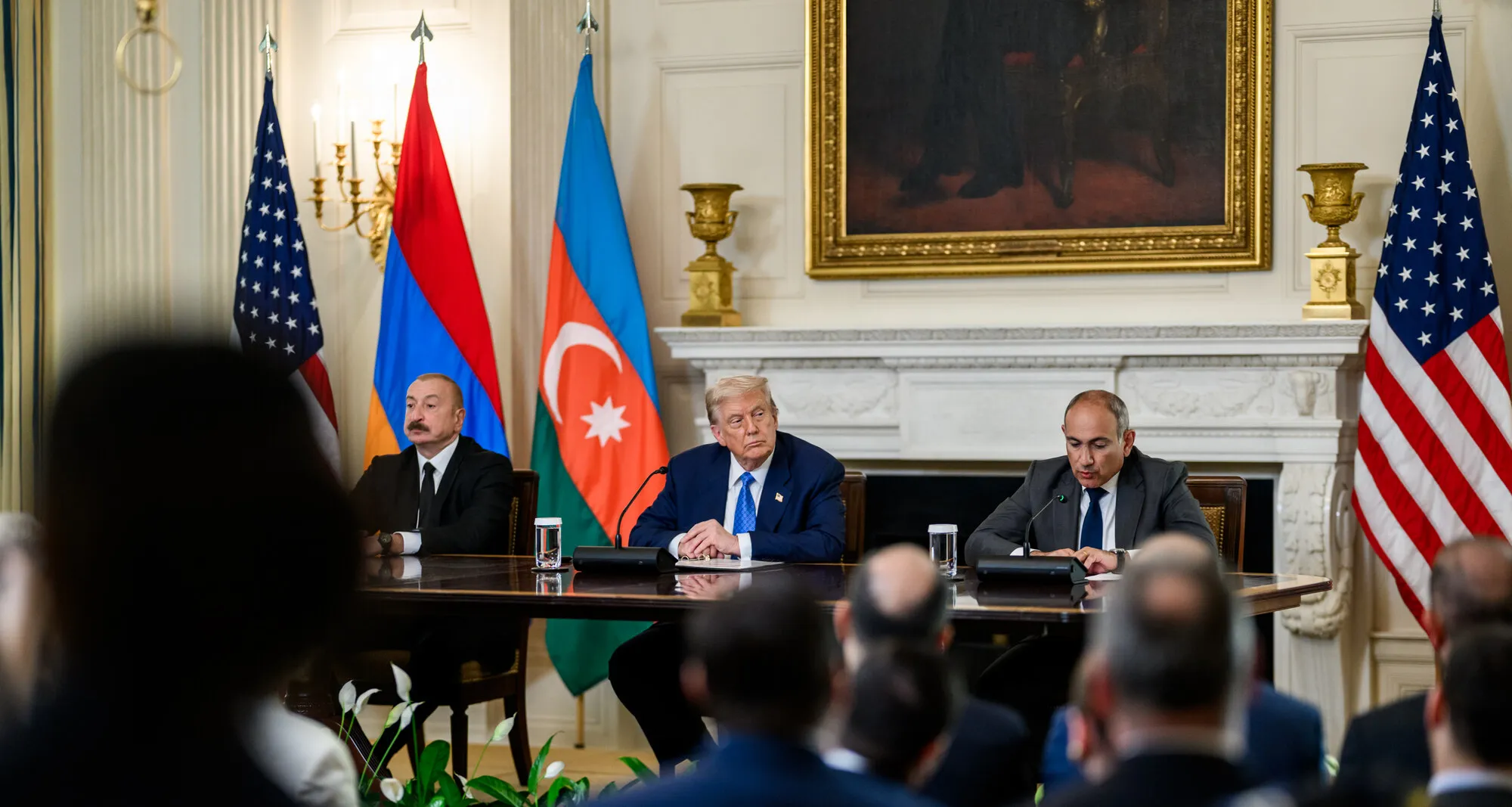
Even on the Armenian-Azerbaijani question Naryshkin has managed to speak publicly out of turn. At the very end of 2024 he declared that Baku and Yerevan most certainly did not regard the United States as a mediator in their talks. And by the summer of 2025 Aliyev and the Armenian prime minister, Nikol Pashinyan, were signing a peace agreement in Washington under the watchful eye of Donald Trump.
The head of the SVR simply cannot keep up with the dynamics of the Russian-American relationship. Throughout the first half of 2025 he was saying that the United States had “degraded as a global hegemon.” Then came the meeting between Vladimir Putin and Trump in Anchorage. Naryshkin spent some time tuning himself to the new frequency. By the beginning of 2026 he was already saying that Russia and the United States had agreed on practically everything and that only the European Union stood in the way. At which point the White House performed a foreign-policy reversal of its own, the war in Iran began, and relations cooled again. Sergei Yevgenyevich lost the thread altogether and switched to Latvia and Armenia.
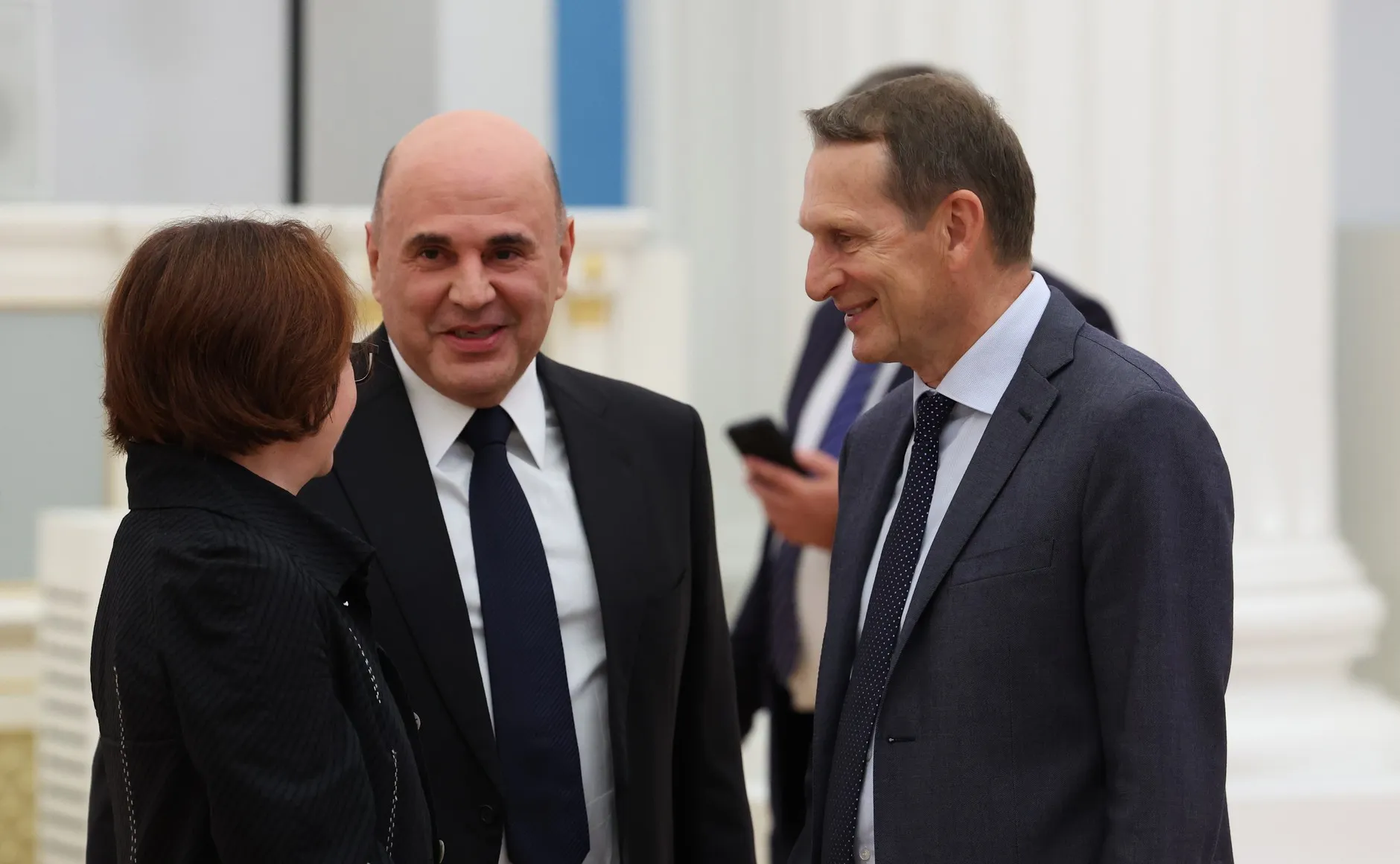
What is more, it has become obvious that the Russian president does not consider it necessary to discuss his coming foreign-policy moves with the head of the SVR at all. And guessing them unaided is beyond Naryshkin. So, exactly as at that session of the Security Council in 2022, he is permanently surprised and agitated.
Among historical monographs, museum exhibits and monuments, Sergei Naryshkin would look far more at home. And he himself would be a great deal happier.