



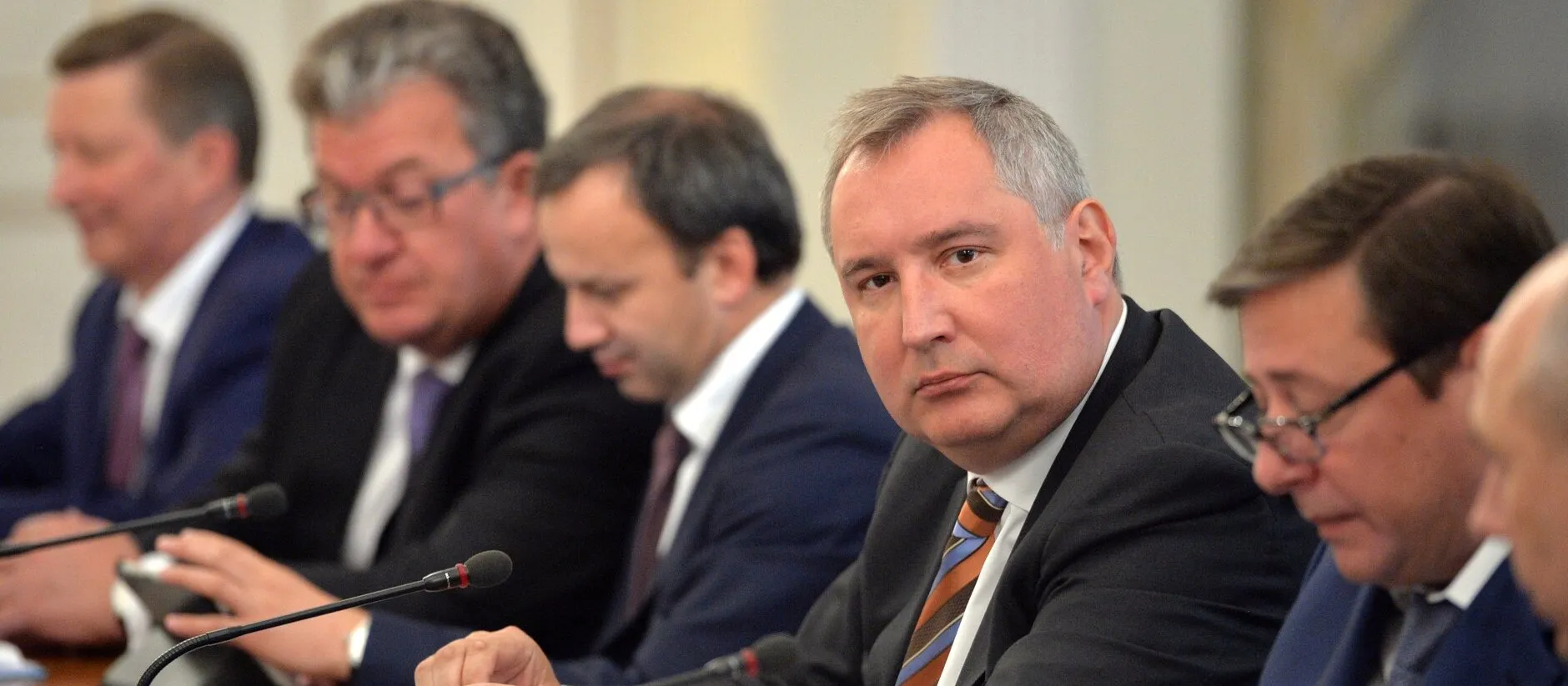
There are politicians who exist inside the system, accept its rules and gradually become part of the machinery of state. And there are politicians who are forever trying to be larger than the system — more visible than their post, louder than their department, more influential than the powers they have been granted. Dmitry Rogozin — ambassador to NATO, deputy prime minister for the defence-industrial complex, head of Roscosmos, today a senator and the curator of a technology centre — has a career record any career diplomat would envy. What emerges on closer inspection, though, is quite another story: a run of moments, each of them more or less explicable on its own, yet together leaving a residue.
When people talk about Rogozin, they usually recall cosmodromes, satellites, sharp retorts on social media. Less often the thing that gave him a national profile in the first place. Rewind to the very beginning — not to Roscosmos, but to the point where this figure first acquired federal scale — and you find yourself in the autumn of 2005, in front of a television showing a campaign spot for the Rodina party. The plot is simple enough. In a courtyard, several men from the Caucasus sit on a bench eating watermelon, rinds scattered around them. Two men approach: the party leader, Dmitry Rogozin, and a parliamentary candidate, a retired general. They demand that the men clean up after themselves. One of Rogozin’s companions, staring straight at one of them, asks: “Do you understand Russian?” The spot ends with a short, stinging slogan: “Let’s clear Moscow of rubbish.” The Moscow election commission judged the material to be inciting ethnic hatred, and a court struck the party from the ballot for the city Duma elections. What inner logic told the future ambassador to NATO and head of Roscosmos that this image, this tone, this register was the most natural way for him to address a voter?
In the summer of 2020 a short phrase from Elon Musk went around the world: “the trampoline is working.” It was both an answer and a joke tossed off in passing at a press conference, but it was aimed precisely at one particular man. Four years earlier Dmitry Rogozin, then still deputy prime minister for the defence industry, had publicly advised the Americans, who had lost their own crewed spacecraft, to reach orbit “on a trampoline.” The line was meant to sting a rival’s national pride. It came back as a boomerang instead — and became one of the most quoted pieces of mockery aimed at the Russian space programme in recent years.
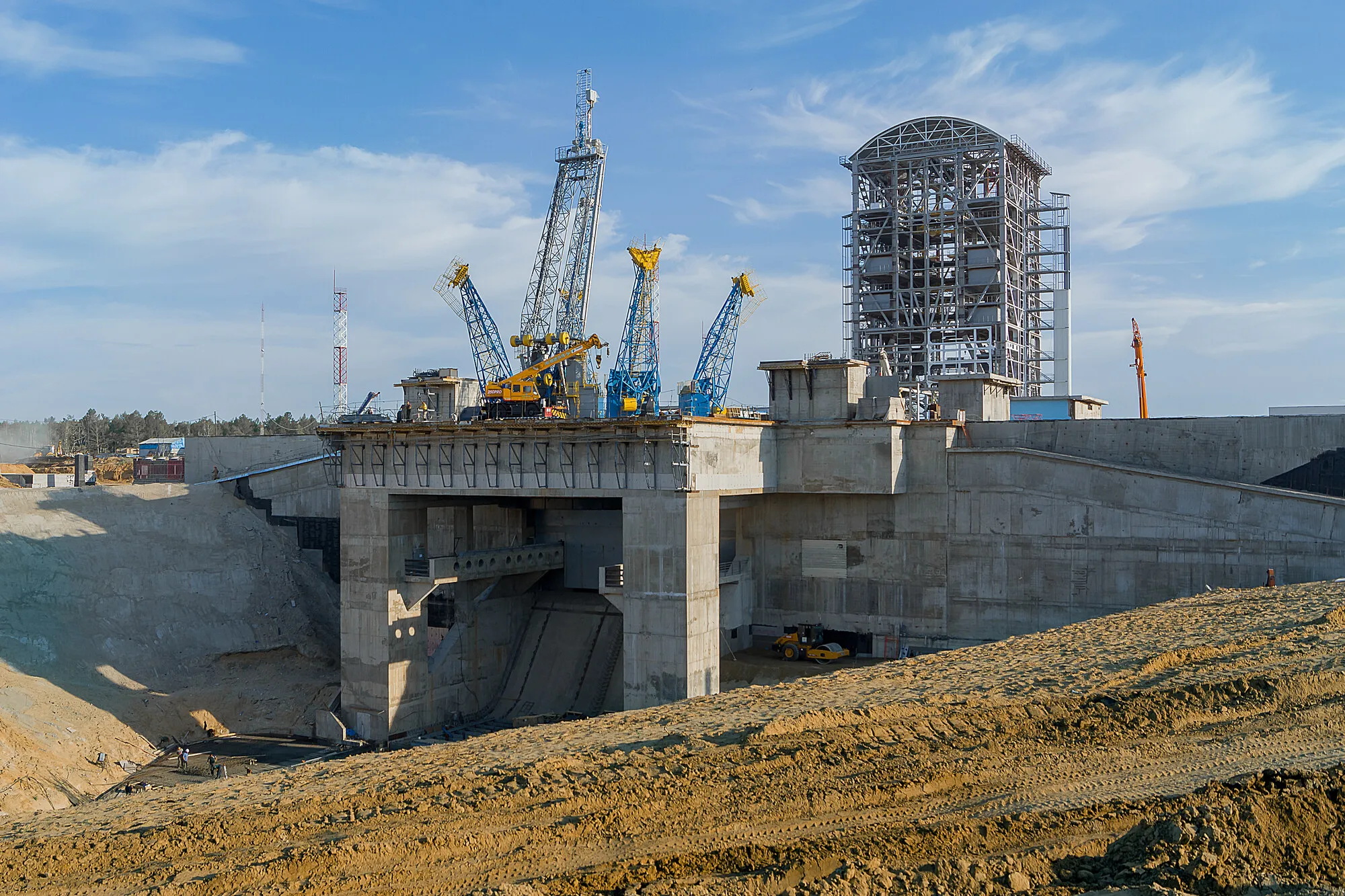
The space programme holds a particular place in Russia’s sense of itself. It is one of the important languages in which the country has spoken to the world as an equal for decades, whatever else was happening in politics. That is precisely why what went on around Roscosmos under Rogozin probably deserves closer reading than an ordinary industry chronicle. On Vladimir Pozner’s television programme, Rogozin spoke of twenty criminal cases surrounding the construction of the Vostochny Cosmodrome, the most conspicuous of them involving Dalspetsstroy, which spent part of the allocated funds on luxury housing in Khabarovsk. Later, by then running the state corporation, he commented on a fresh wave of embezzlement — hundreds of millions of roubles for work that was never done or was documented fictitiously. But the head of a state corporation is not answerable for the number of problems exposed. He is answerable for building a system that does not let them happen in the first place — particularly in a state structure he ran for years.
Some time ago the corridors were discussing Rogozin’s attempt to merge the country’s electronics manufacturers into a new federal concern of a weight comparable to Rostec. The project came to nothing. Analysts read his moves either as an ill-timed initiative or as an overestimation of his own bureaucratic reach.
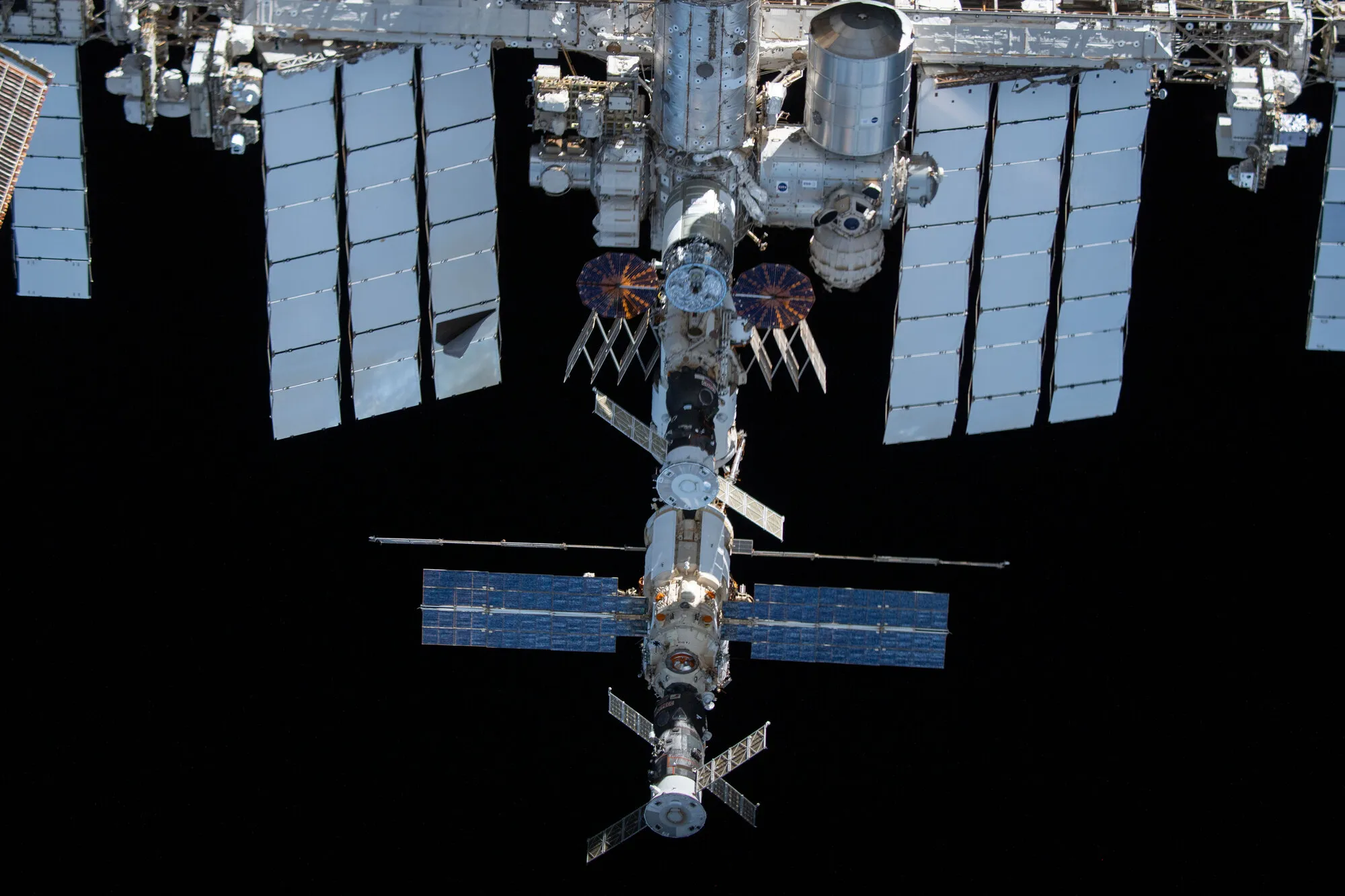
Spring 2022. The International Space Station is still in orbit, but the world around it is changing fast. Now heading Roscosmos, Rogozin issues a statement addressed to Western partners: if sanctions against Russian contractors are not lifted, the 500-tonne structure of the ISS could come down out of control — and fall, he specifies, not on Russian territory, since the station does not pass over it, but on India or China, say. “Have the people who generate sanctions checked for illness.” And this is his direct address to Western officials.
Was it a considered, agreed negotiating position on the part of his agency — a way of showing what a break in cooperation would cost? Or the spontaneous, emotional reaction of a man who at that moment was speaking in the first person rather than for the corporation? Nobody, it seems, ever gave an unambiguous answer, then or since. All that is known is that in roughly the same months Rogozin got into an open public quarrel with Alexei Kudrin, head of the Accounts Chamber, calling him a “professional liberal” in reply to his criticism of the space programme — one more episode in which a working disagreement between two federal officials is settled not in a meeting room but in front of the whole country.
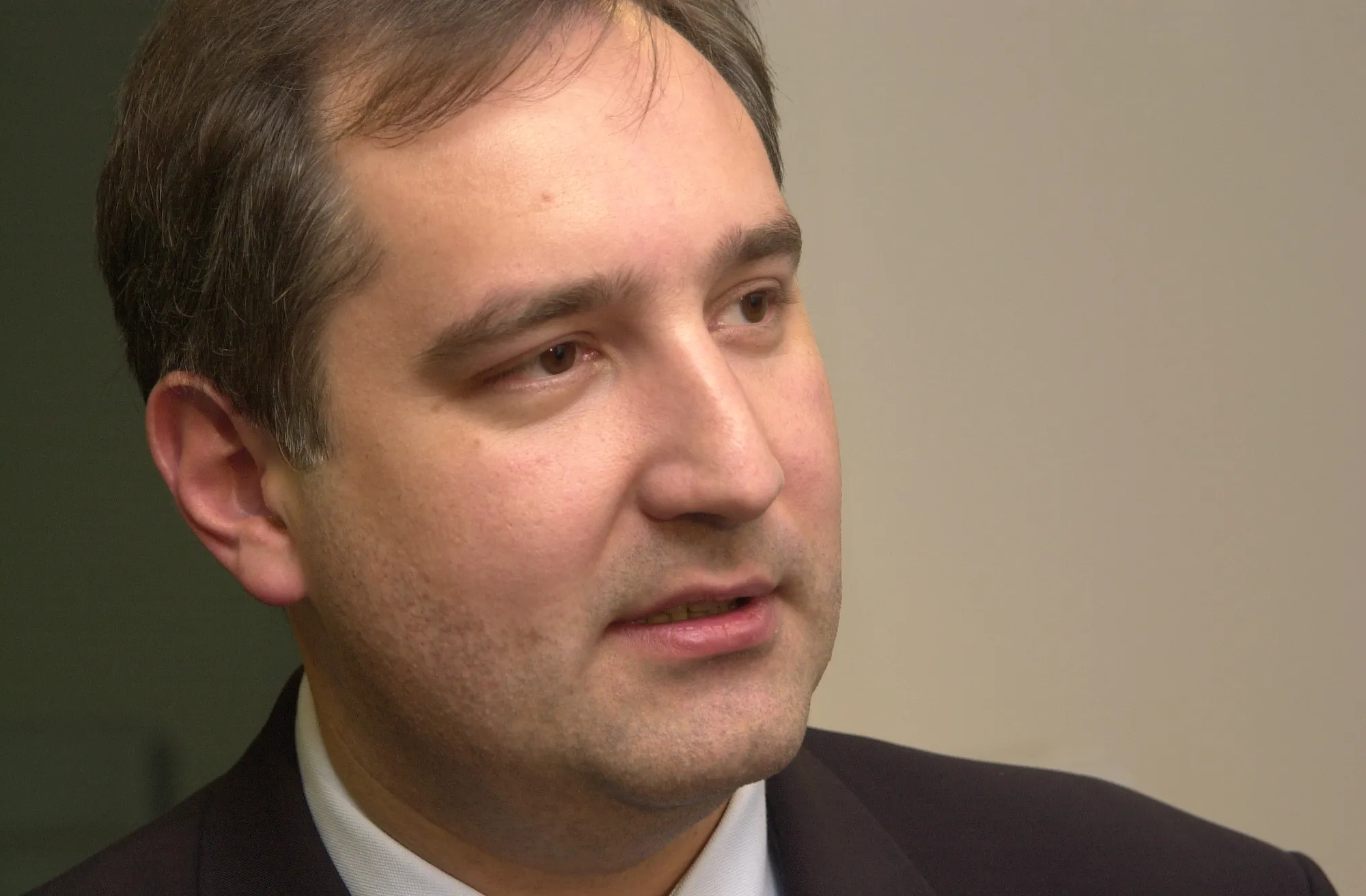
As ambassador to NATO, Rogozin worked out a recognisable style: the loud demand, the striking phrase, the demonstrative gesture. He evidently believed this strengthened his negotiating position. The demand that NATO annul its defence plans for the Baltic states, however, changed nothing in the end. His answer to personal sanctions — an offer to send the authors “teeth ground down by impotent rage” — was widely quoted, but hardly brought the sanctions question any closer to resolution. Comparing the Brussels bureaucracy to a donkey led nowhere either: not one frozen account was unfrozen, not one trade contact restored.
In this style Rogozin is already speaking on behalf of the Russian state — though international politics is rarely arranged so that states remain either friends or enemies for long. Diplomacy calls for a rather disagreeable art: sometimes you have to leave the other side room to change its position without turning that change into a public defeat. You have to keep channels of communication open with people who may be political opponents today and potential partners tomorrow.
Today Rogozin oversees the Bars-Sarmat special-purpose centre, which tests unmanned systems on the line of contact — work the front unquestionably needs. And yet there are people whose public biography gains weight over the years. And there are those whose biography gains only volume — the number of words spoken grows, while the amount of anything actually changed around them does not grow at all. For a state figure of that scale and those ambitions, this is critical. Rogozin, it seems, has settled for good into the second genre while carrying on as though he were in the first. The only question is how many more years it will take for everyone to say so out loud.