



The Greater the Danger, the Greater the Power
There are people whose power grows with the danger: the more alarming the situation, the higher their standing, the broader their powers and the fatter their budgets. Alexander Bortnikov, who has headed the FSB since 2008, is one of them. The 2026 budget sets aside 13% more for the police, the National Guard and the security services, a record 3.9 trillion roubles.
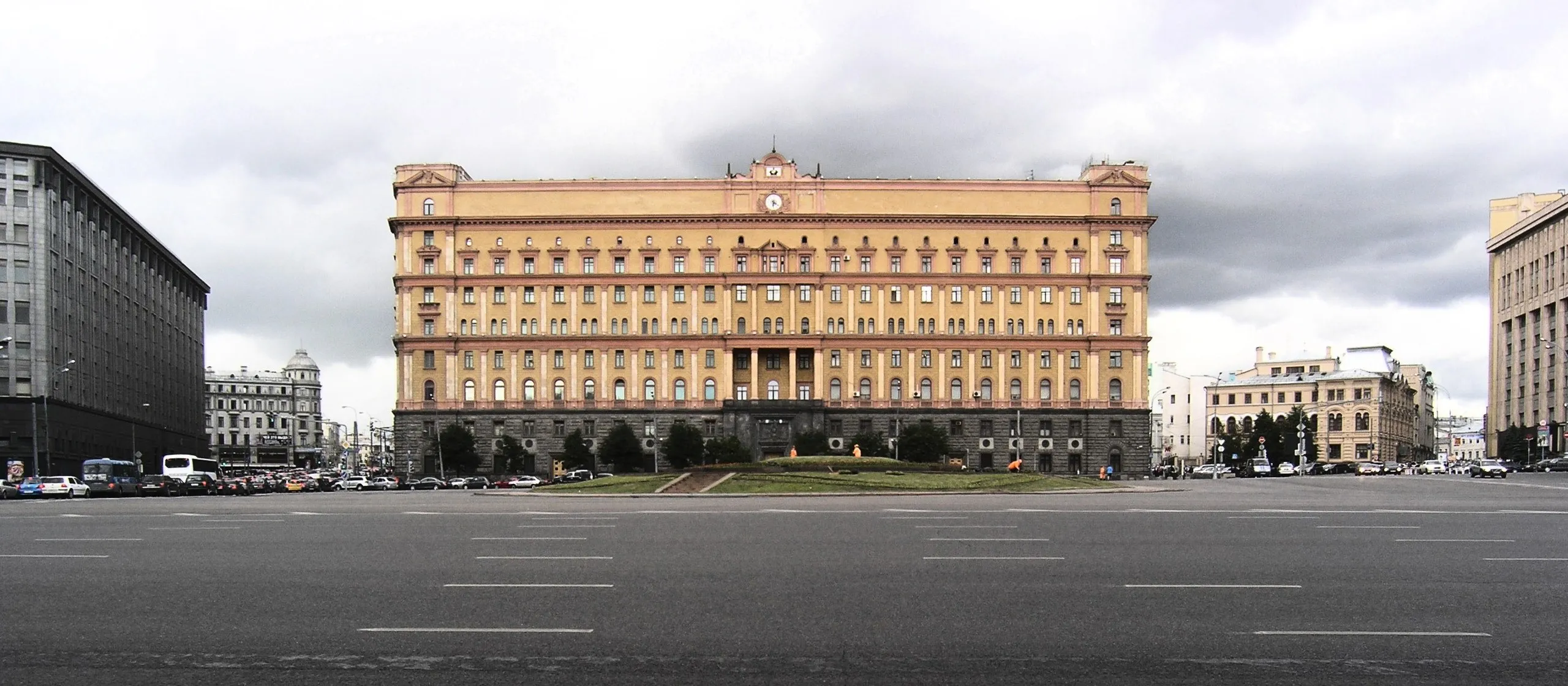
In recent years the FSB has become one of the most powerful agencies in the country. Counter-intelligence, the border guards, control over communications, the fight against “foreign influence”, the National Anti-Terrorism Committee: all of it converges in a single office on Lubyanka Square. And each of these fields grows faster the longer the stand-off with the West goes on. Since the end of 2025 alone, the Lubyanka has acquired its own pre-trial detention centres, the right to order operators to cut off communications, and access without a court order to the data of Russian companies. Treason cases are multiplying too: in the first nine months of 2026 the courts handed down 459 verdicts for treason and espionage, more than in the whole of 2025, itself a record year. Such cases are investigated by the FSB.
There is no conspiracy in this. It is the simple logic of any security agency: its weight is set by the scale of the threat. If the threat shrinks, the agency’s importance shrinks with it. So it suits the Lubyanka for the threat to stay large, easy to grasp and, ideally, eternal. There is no need to invent it: it is enough to point to the same address every time. Vladimir Putin, who ran the FSB in 1998–1999, knows this logic from the inside, and knows what it is worth when the time comes to make a deal.
Always the West’s Fault
The pattern repeats itself year after year. Islamic State (banned in Russia) claimed responsibility for the attack on Crocus City Hall in March 2024. Four days later Bortnikov declared that Western intelligence services and Ukraine had “needed” the attack, and in May he named Ukrainian military intelligence as having had a hand in it. In August 2024 the Ukrainian army crossed the border guarded by the FSB’s Border Service and took several villages in the Kursk region. In the autumn Bortnikov explained that the incursion had been meant to remove the “preconditions for a settlement”, and that Ukraine’s operations were being planned by career NATO officers. A year later came Spiderweb.
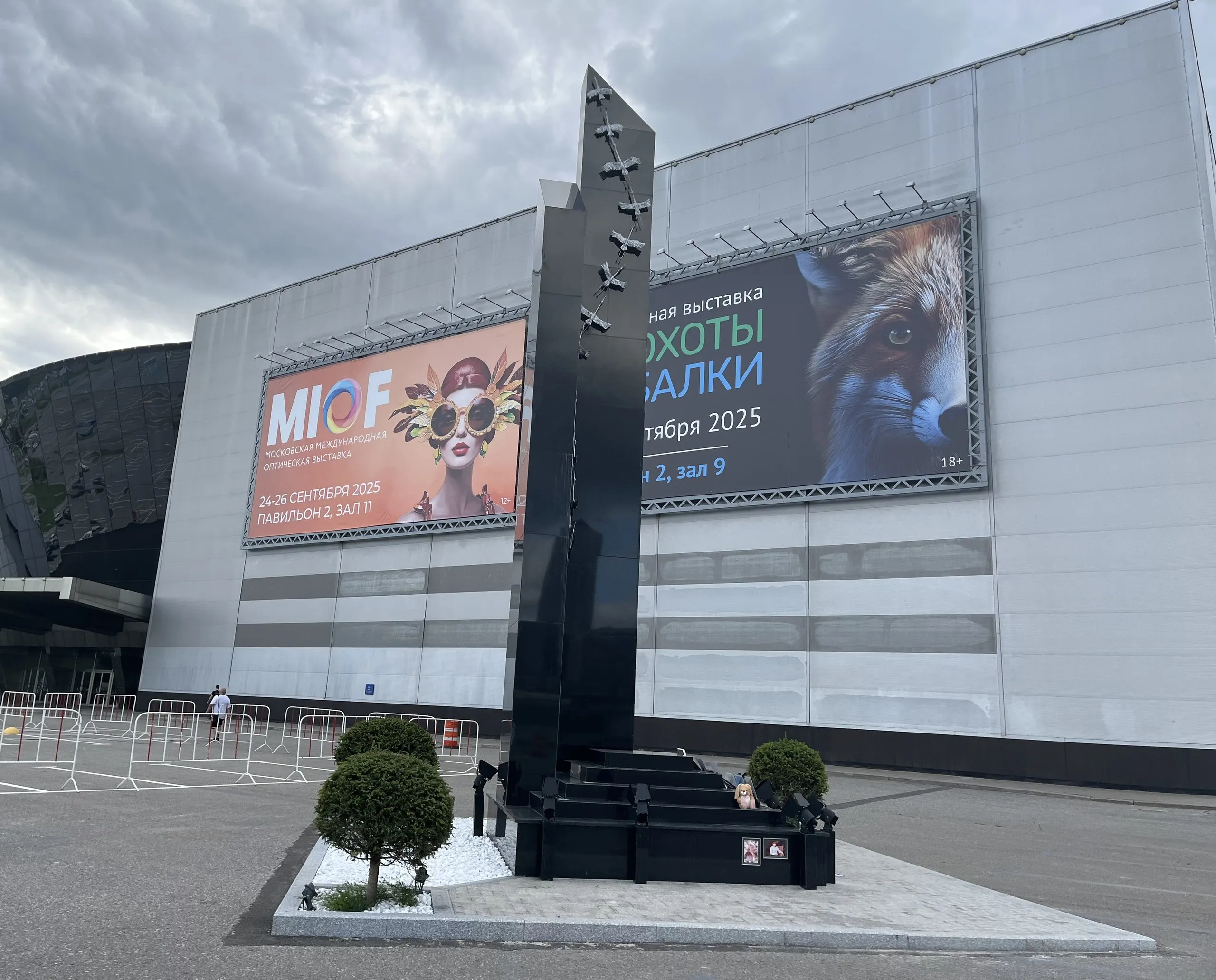
Failures that might have been laid at the door of the security service itself become, in its reports, proof that the West is a mortal enemy with whom it is impossible to do business.
The Kremlin at the Table, the Lubyanka Digging In
At the end of May 2026, at a meeting of the heads of CIS security services, Bortnikov said that the West wanted to undermine the Commonwealth from within, and that Ukraine had been turned into a “springboard” for sabotage against Russia. Nor were the “digital laboratories” forgotten: according to the FSB chief, Western intelligence services are using AI to prepare “colour revolutions” in CIS countries.
For a security service, such language is routine. But it echoes far beyond the Lubyanka. Declare Britain the handler of sabotage operations and NATO a developer of biological weapons, and it becomes hard to sit down at a table with them. If the West is deliberately wrecking everything around Russia, any contact with it looks like treachery. Rhetoric of this kind is at odds both with Donald Trump’s demand to get to the negotiating table quickly and with the words of Vladimir Putin himself, who has said more than once that he is ready for talks.
This is where the Kremlin’s line and the Lubyanka’s part ways. The Kremlin is looking for a chance to talk: in November, after a nine-month pause, delegations from Russia, Ukraine and the United States met again in Abu Dhabi. The FSB is methodically proving that there is no one to talk to. For an agency whose influence rests on the image of a besieged fortress, rapprochement with the West is dangerous in itself. Dangerous not for Russia, but for the generals of the Lubyanka, who stand to be left with smaller budgets and less power.
You could object that the Kremlin says the same thing. After Crocus, Putin himself linked the attack to the “Kyiv regime”. But for the president that was a remark he can step back from at the negotiating table. For the agency it is the very foundation of its budget and its powers.
A State within the State
Bortnikov has run the FSB for almost two decades, longer than any of his post-Soviet predecessors. In that time the agency has become a state within the state, with its own economy, its own personnel system and its own ideas of what is good for the country. The Economic Security Service, which Bortnikov himself headed until 2008, keeps an eye on the banks. Just how close an eye became clear in 2019, when Colonel Kirill Cherkalin, the officer in charge of banks in that service, was arrested. Some 12 billion roubles were found on him and his fellow officers.
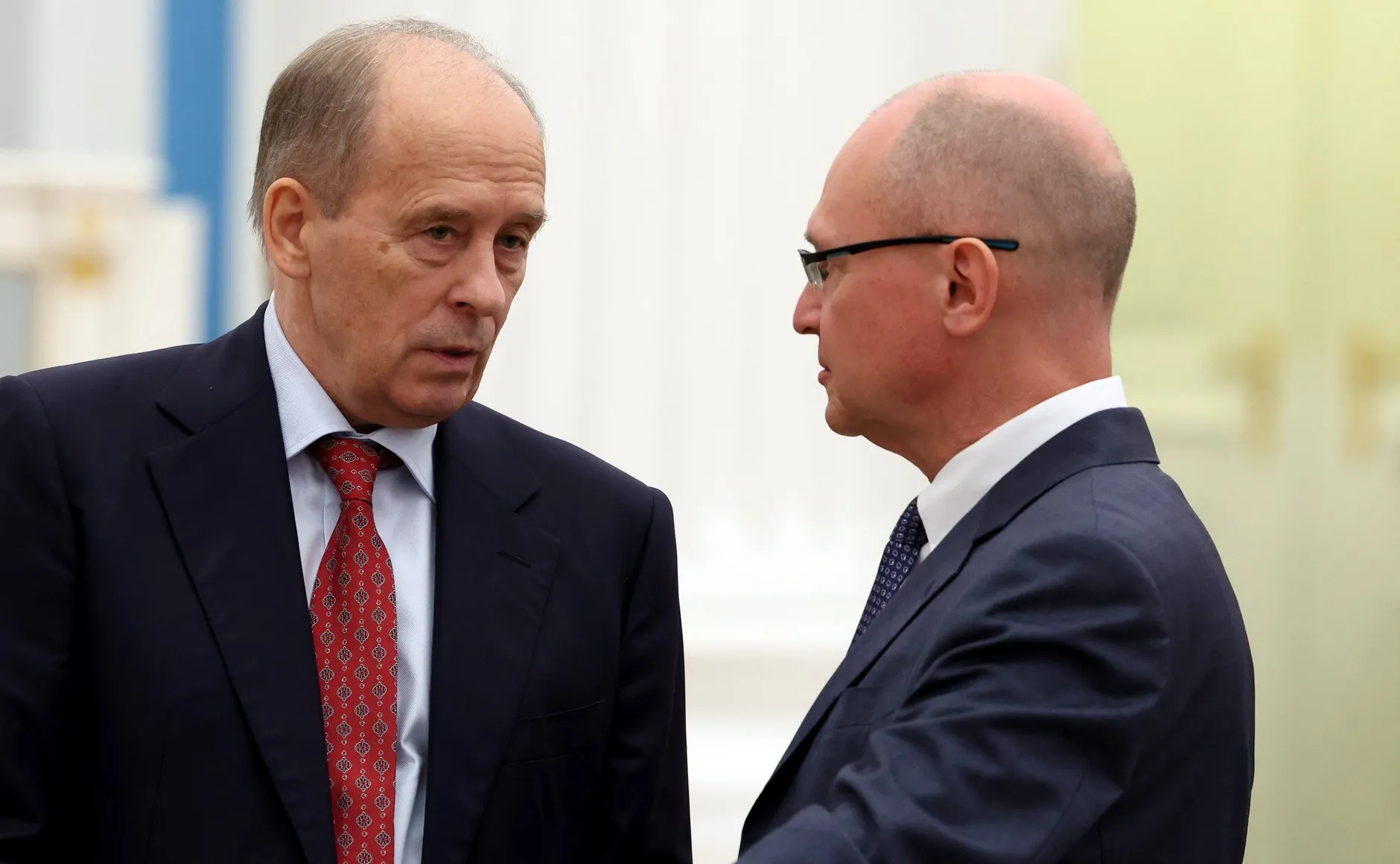
Those who stay in power a long time begin to believe that the interests of their agency and the interests of the country are one and the same. They are not. The country needs a way out of the conflict, the revival of trade and a normal life. The agency needs an enemy. And until those two interests are pulled apart, the second will keep holding back the first, quietly, professionally and with an unshakeable sense of its own righteousness.
After Shoigu
Shoigu’s circle has already been taken apart: Timur Ivanov, Pavel Popov, Dmitry Bulgakov and, in March 2026, Ruslan Tsalikov, his long-serving first deputy, have all ended up under investigation. It was the Lubyanka itself, incidentally, that took them apart. The Lubyanka, for its part, still stands as it always has. Yet on Sunday Bortnikov turns 75, and in September the investigative outlet Important Stories, citing former FSB officers, reported that he has long been asking to retire, and that his duties are increasingly being carried out by his first deputy, Sergei Korolev. If that is true, we will soon see whether the need for an enemy leaves along with Bortnikov.